A Service Design Approach
to Modernizing Public Libraries
Optimizing Civic Ecosystems: Beyond the Digital Screen
An exploration of UX methodologies applied to physical public infrastructures, focusing on behavioral psychology, spatial Information Architecture, and restorative environments.
Key Outcomes
Behavioral Nudging (Acoustic Control)
Physical IA (Wayfinding)
Biophilic Strategy (Well-being)
Project
overview
Background
Public libraries suffer from a "Identity Crisis"—they must simultaneously serve as a quiet study hall, a social community hub, and a digital access point.
Challenge
The challenge was to apply digital product methodologies to a physical, non-linear environment to identify systemic friction in public service delivery.
Objectives
Audit the space
Understand user base
Redesign the space to give a better service
Starting Point
The friction: A library in an "Identity Crisis"
Acoustic Conflict: Overlapping needs between silent study and social community hubs
Signage Fatigue: Contradictory physical IA forcing total reliance on staff for navigation
Environmental Stress: Sterile atmosphere with zero biophilic elements, reducing user retention
High Operational Load for Staff: Personnel were forced into a "policing" role to manage noise and user orientation
Broken Omnichannel Flow: Disconnect between digital reservations and physical book collection
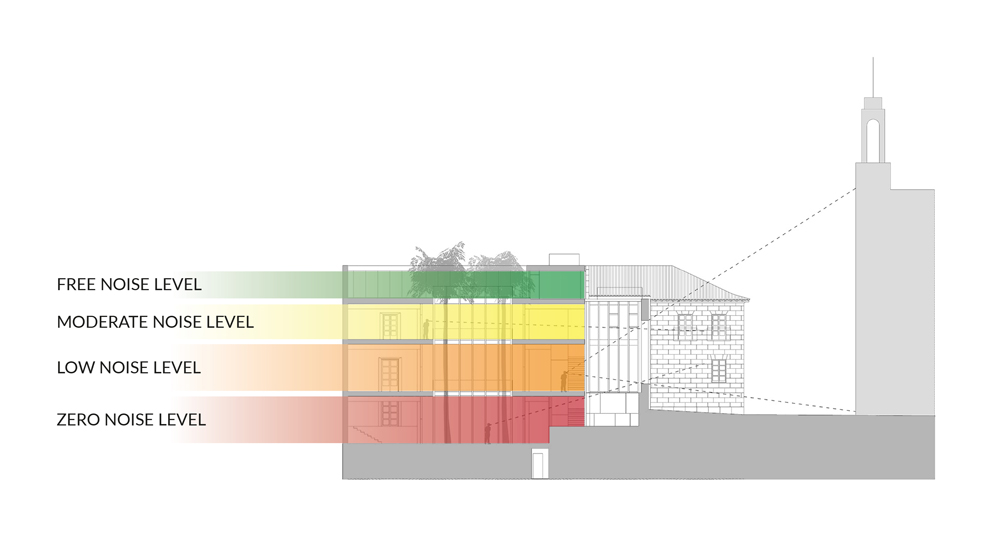
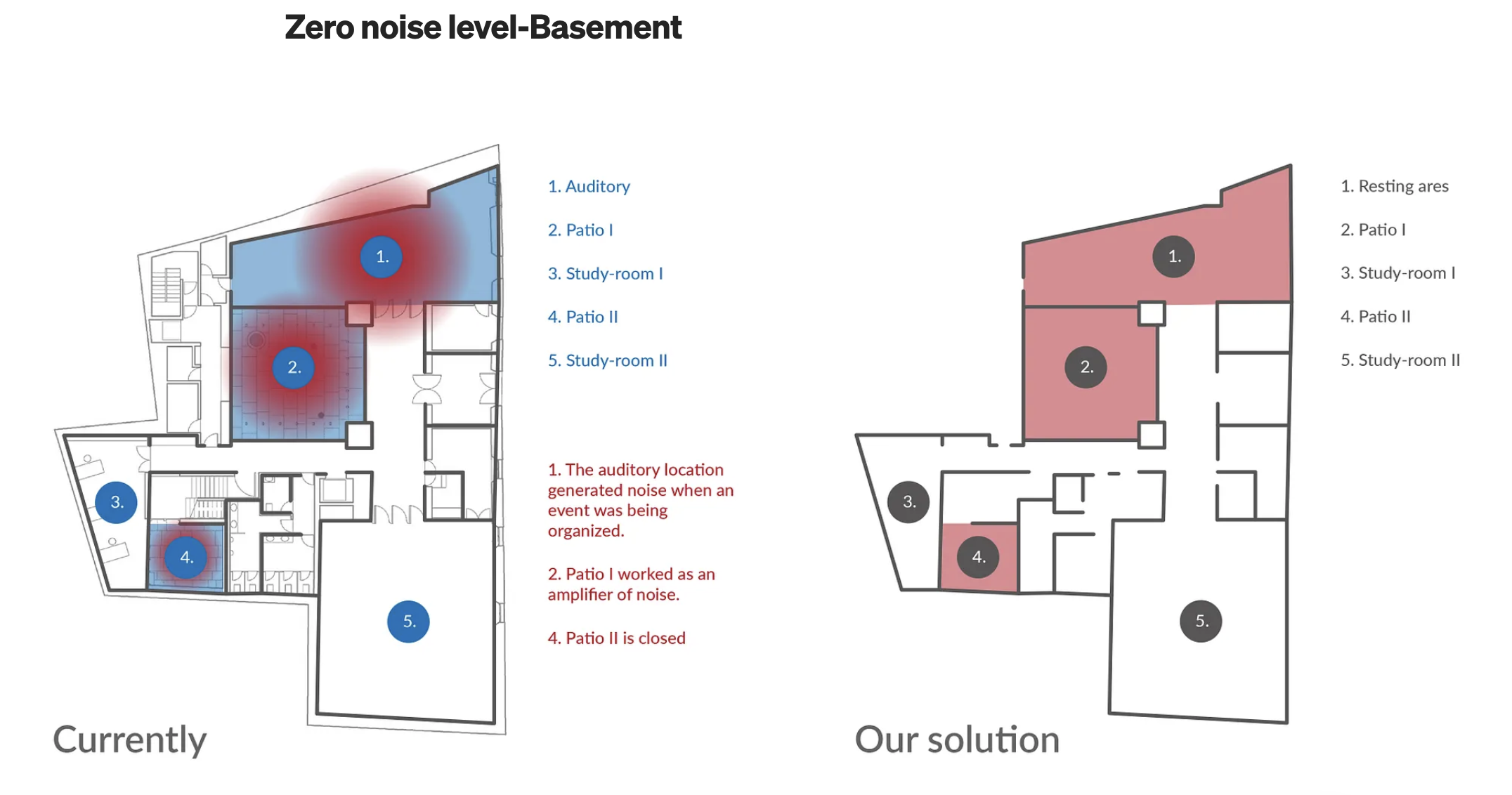
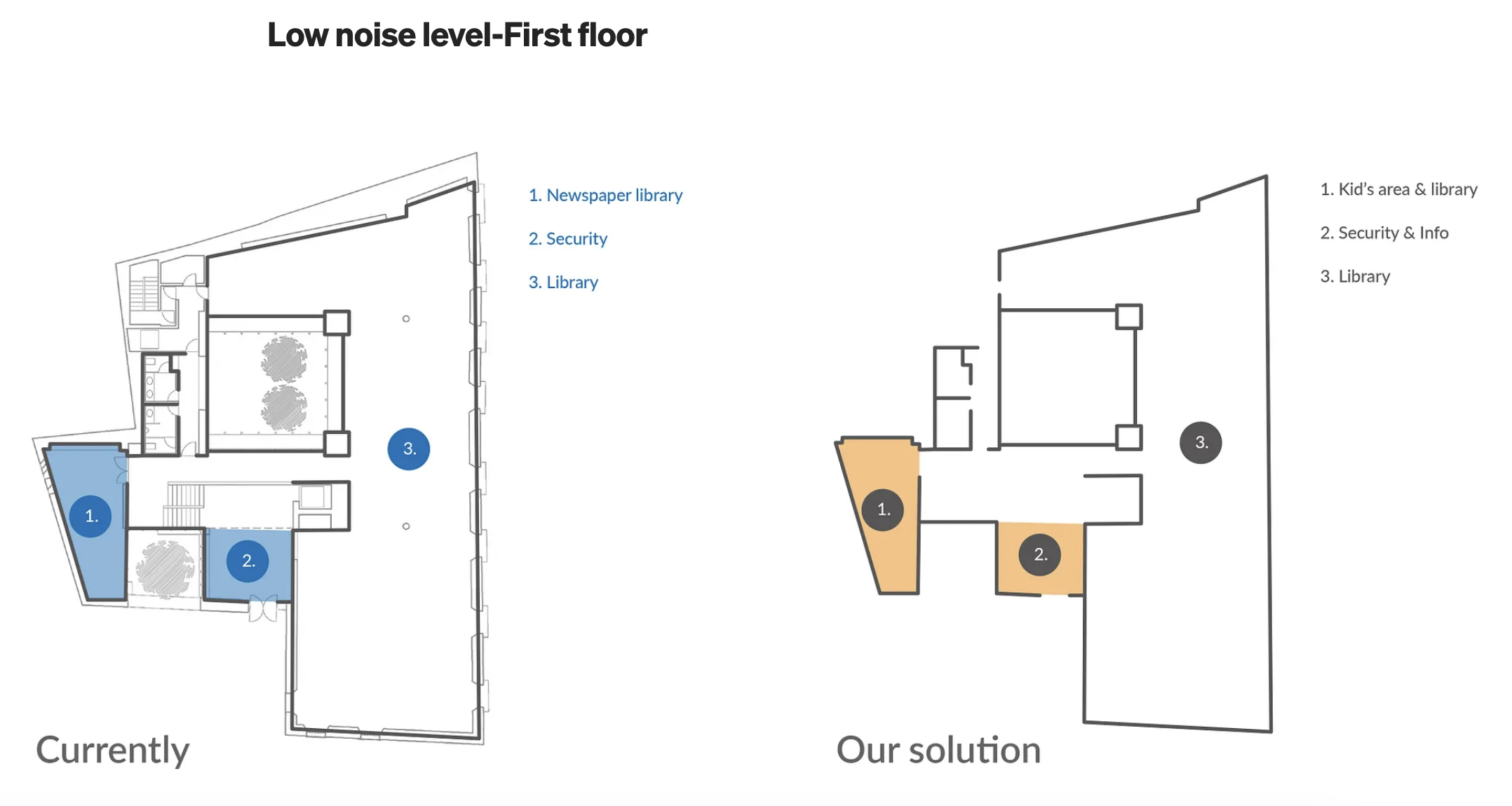
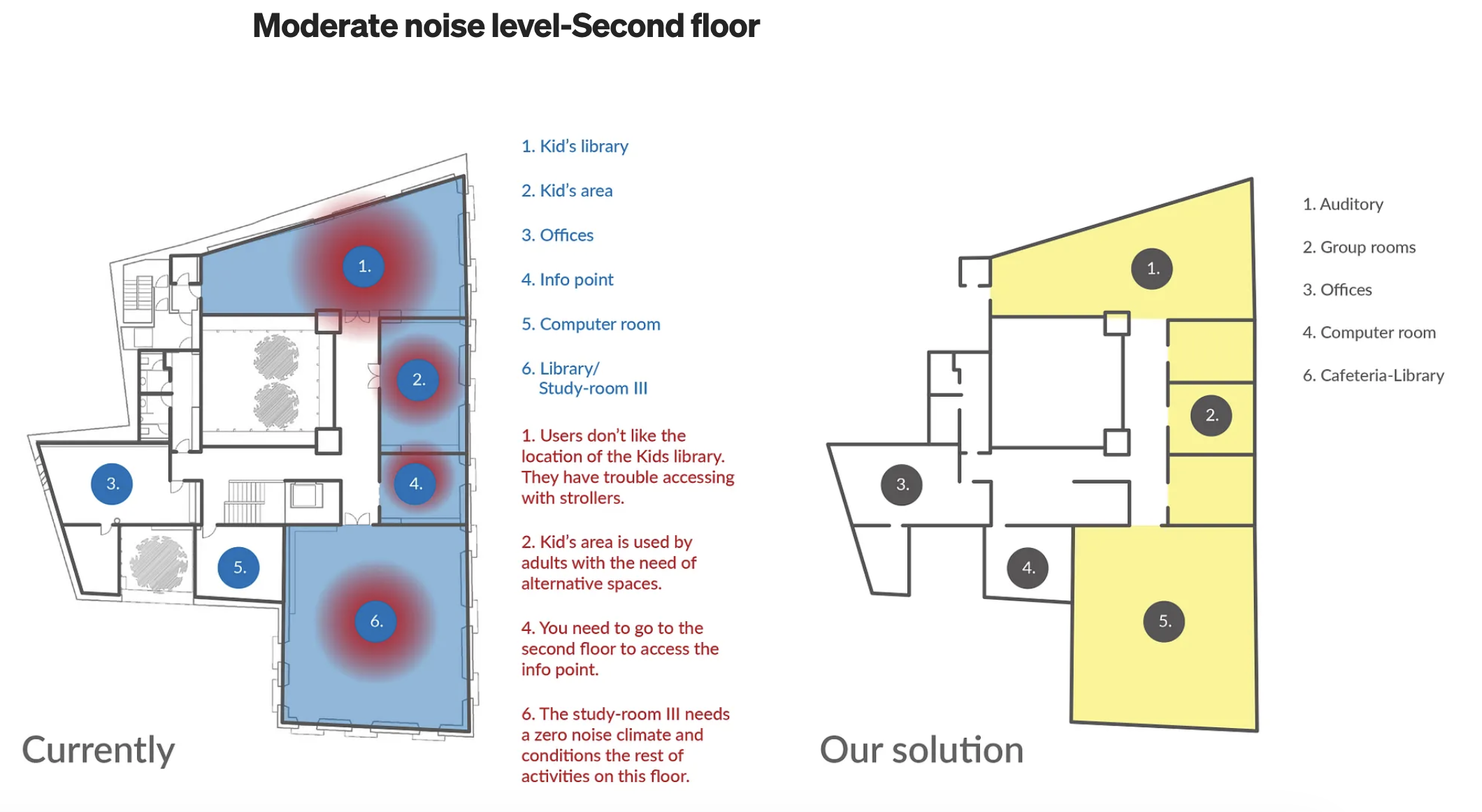
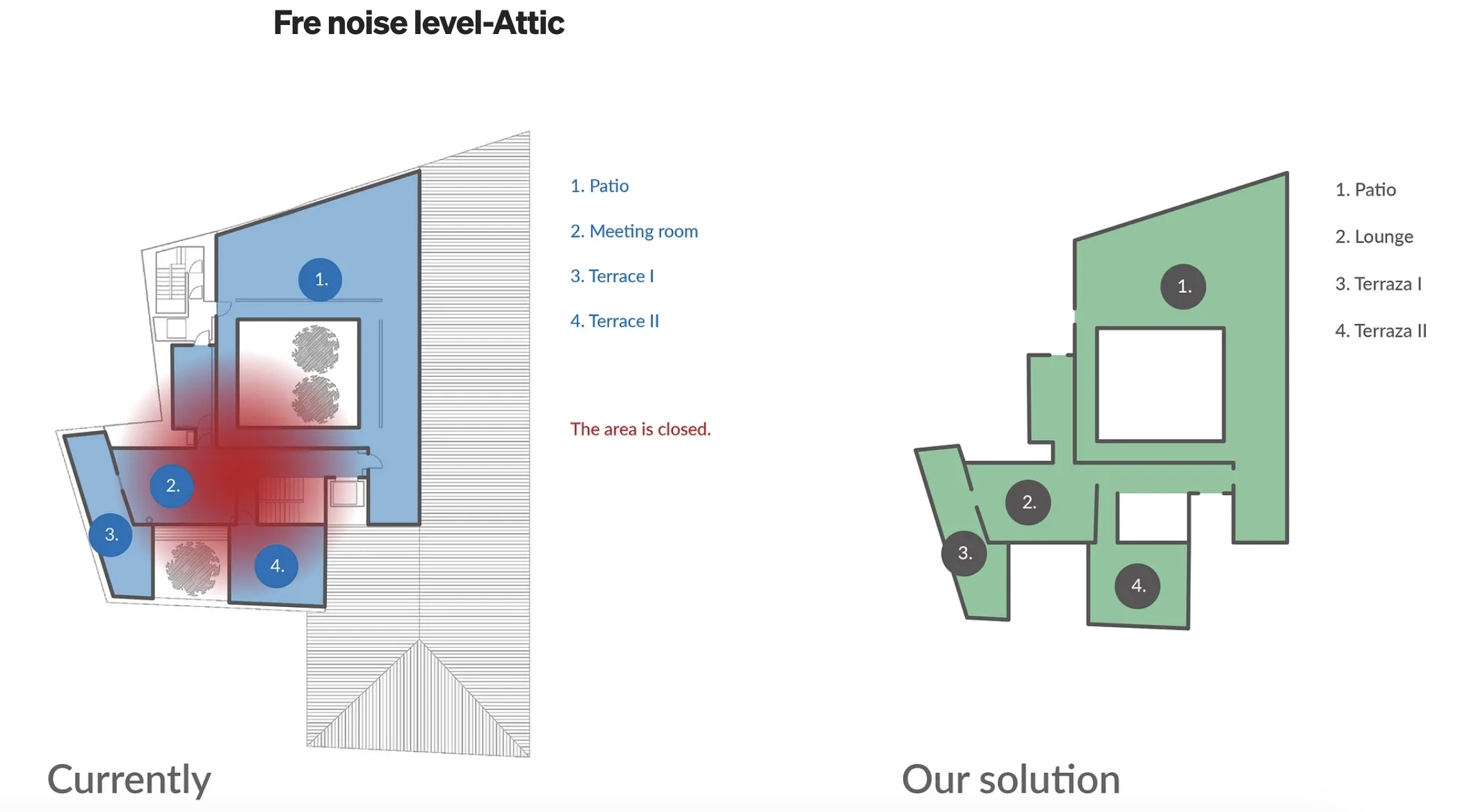
The "Traffic-Light" of Noise
Key strategic initiatives
Acoustic Zoning
Implementing a visual traffic-light system to enable community self-regulation, reducing staff "policing" by 80%.
Modular Wayfinding & Spatial IA
A redesigned Physical IA that simplifies navigation and ensures a friction-less, autonomous user journey.
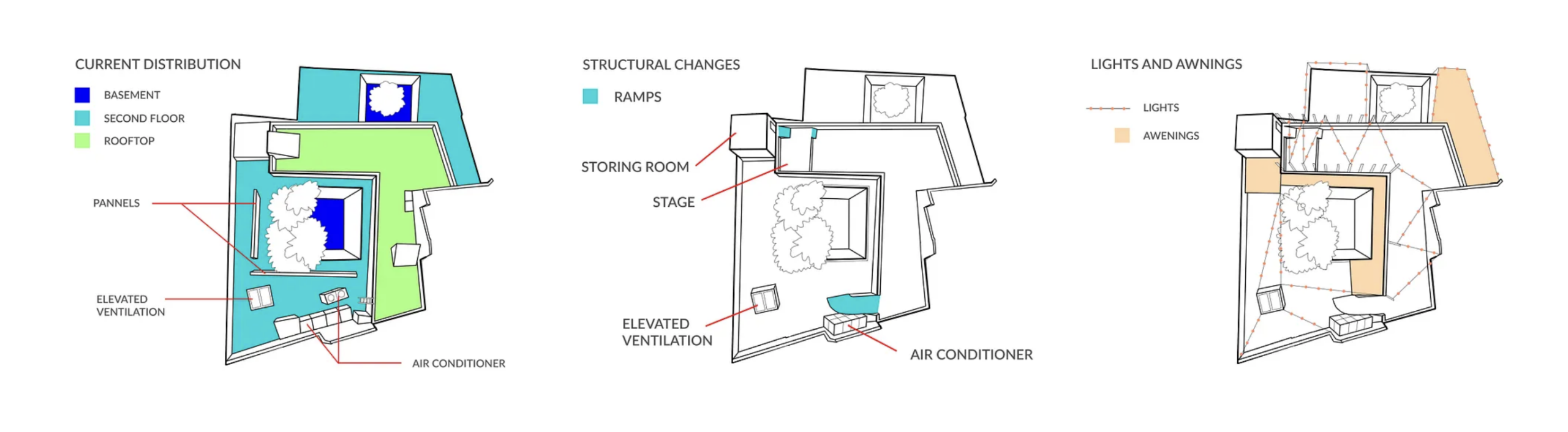
Biophilic UX
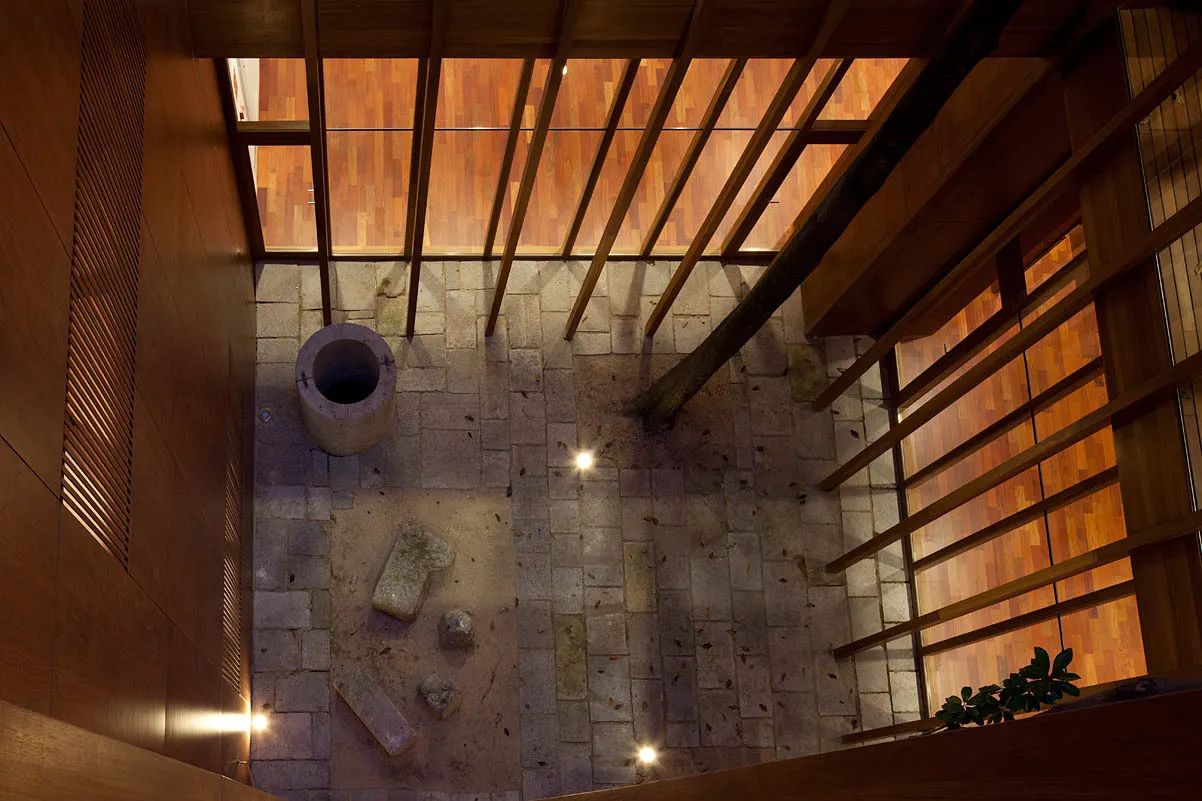
Integrating natural elements to transform a public institution into a Restorative Space for mental well-being.
Omnichannel Alignment
Streamlining the end-to-end service flow to bridge the gap between Online Portals and Physical Shelves.
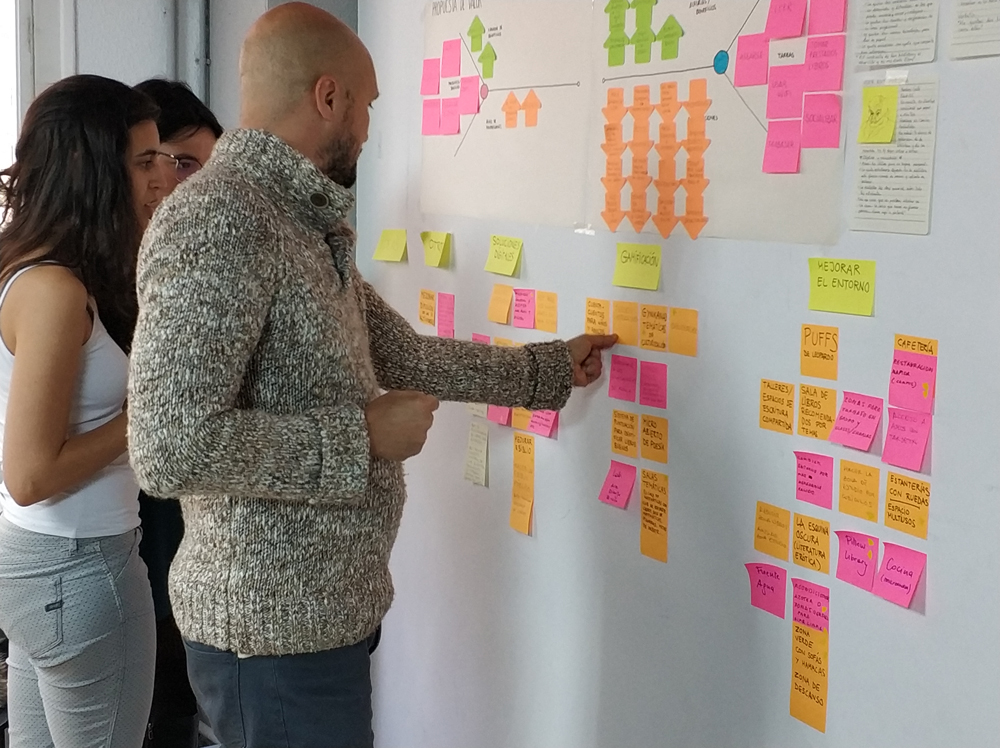
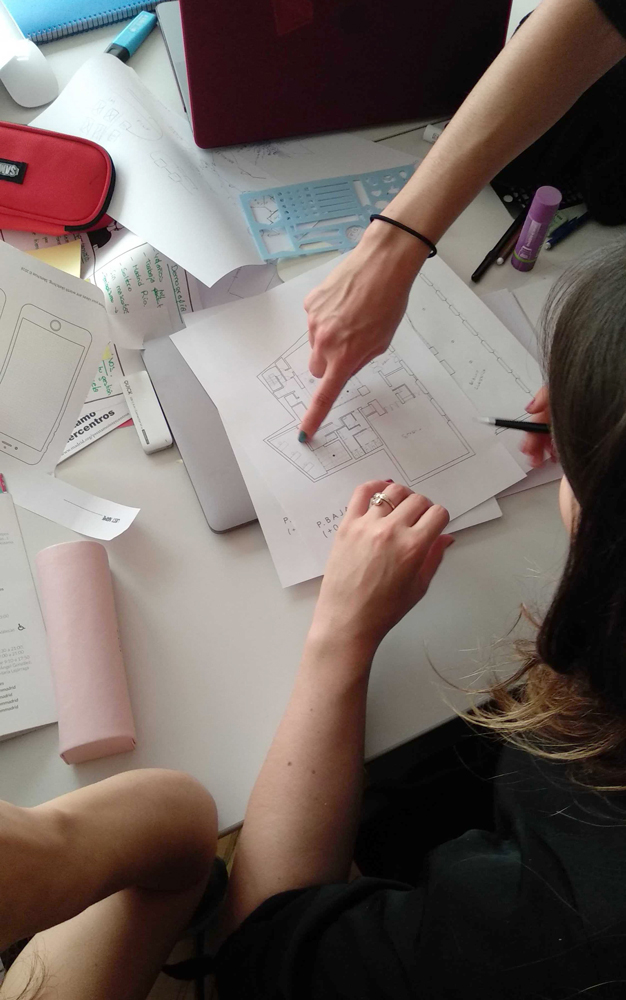
To generate the traffic-light of noise we first audited the library (spaces, staff and users) to do a heatmap of friction that allowed us to rethink the entire structure.
Conclusions
This project served as a stress-test for UX methodologies in a non-digital realm, proving that spatial design and behavioral psychology are fundamental pillars of the User Experience.